Robo-BIN
Our project introduces a groundbreaking autonomous waste management solution designed to revolutionize public hygiene. This isn't just a single smart bin, but a networked fleet of intelligent robots that work in perfect harmony. Each robot is self-aware, navigating to its designated spot to provide a hands-free disposal experience and then autonomously returning to a central hub when full. The system ensures cleaner, more efficient public spaces while minimizing the manual effort required for waste collection.
Services
IoT based project
Category
Automatic garbage disposal bot.
Client
Confidential
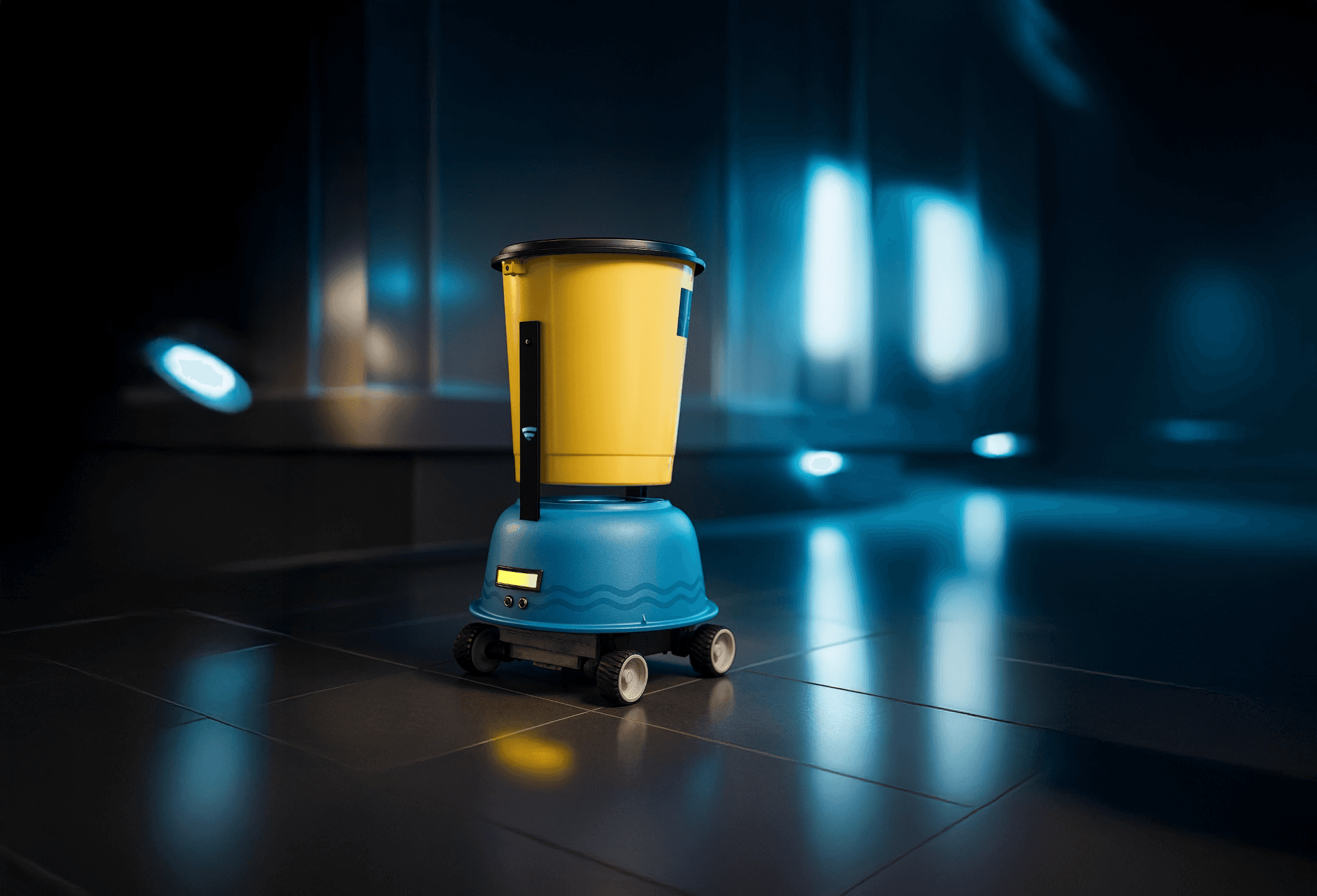
The Vision: A Smarter Approach to Waste Disposal
In an increasingly urbanized world, efficient and hygienic waste management is not just a convenience—it's a necessity. Traditional waste bins often lead to overflowing messes, unpleasant odors, and manual collection that is both labor-intensive and inefficient. Our project introduces a revolutionary solution: an autonomous, intelligent garbage disposal robot designed to transform how we handle public waste, with future applications in companies and hospitals. This concept goes beyond a simple bin on wheels; it's a networked fleet of robotic assistants working in perfect harmony to keep public spaces clean and sanitary.
The Core Concept: Decentralized and Coordinated Waste Disposal
Our system is built on the principle of decentralized and coordinated waste management. Each robot is a self-contained unit, assigned to a specific location and a particular type of waste (e.g., plastics, paper, general). This specialized approach ensures proper sorting at the source, a critical step toward effective recycling. The robots are equipped with proximity sensors that detect when a person is nearby, automatically opening their lids to provide a hygienic, hands-free disposal experience. Once the waste is deposited, the lid closes, containing odors and preventing pests. This intuitive interaction streamlines the disposal process for the public while maintaining a clean environment.
AI and Autonomous Integration: The Brains of the Bot
The intelligence of our robots lies in their advanced AI and autonomous capabilities. Each unit is integrated with a comprehensive navigation system using GPS and location services. This allows the robot to know its precise location and its assigned spot. The system is designed to be highly self-aware, constantly monitoring its internal fill level. When a bin is full, the robot autonomously decides to travel to a designated dumping station.
To ensure safe and smooth operation in public spaces, the robots are equipped with sophisticated obstacle avoidance technology. Using a combination of ultrasonic sensors and computer vision, they can detect and navigate around people, pets, and other static or moving objects. This "self-awareness" is crucial, ensuring the robots can perform their duties without posing a risk to the public.
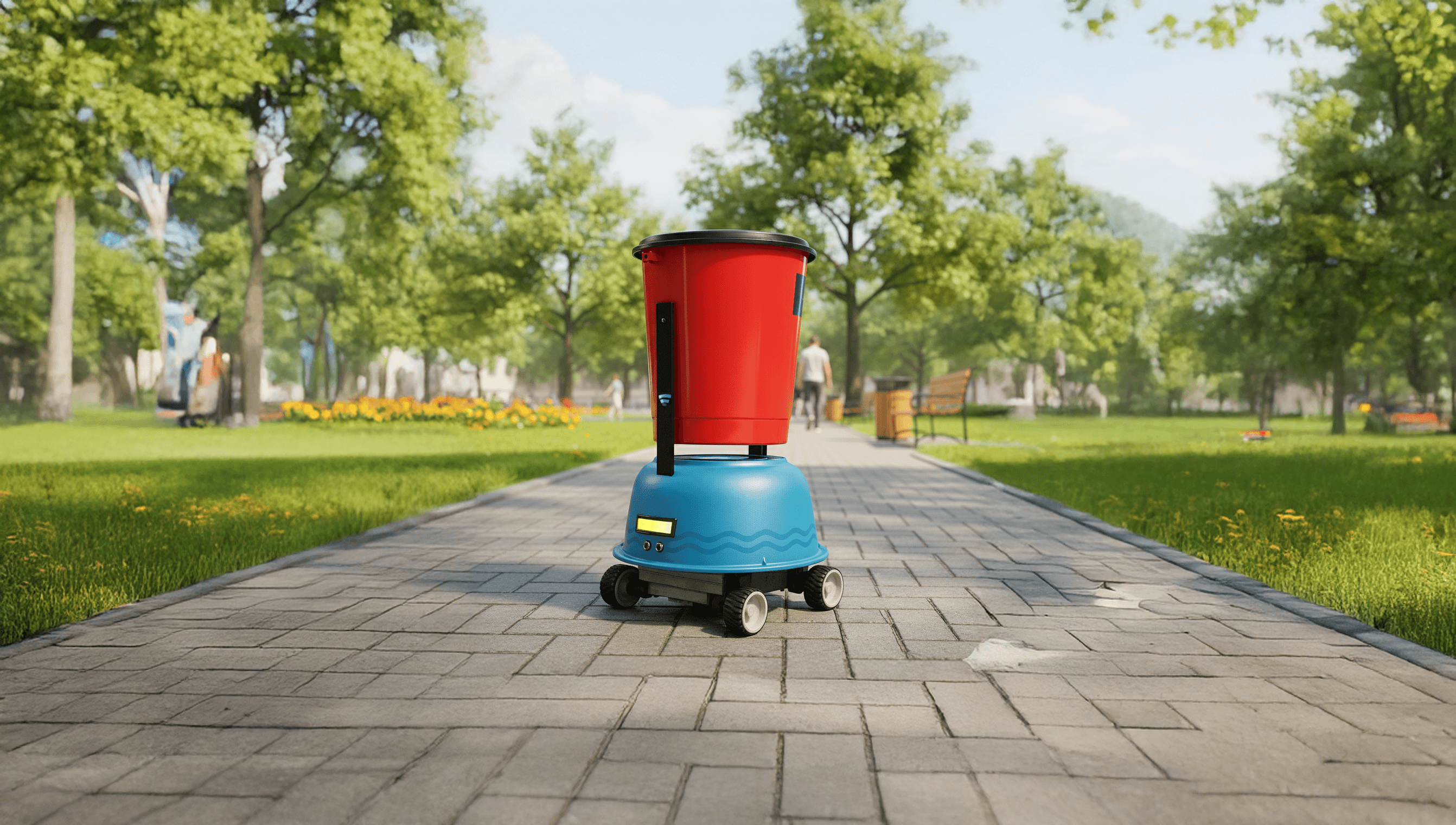
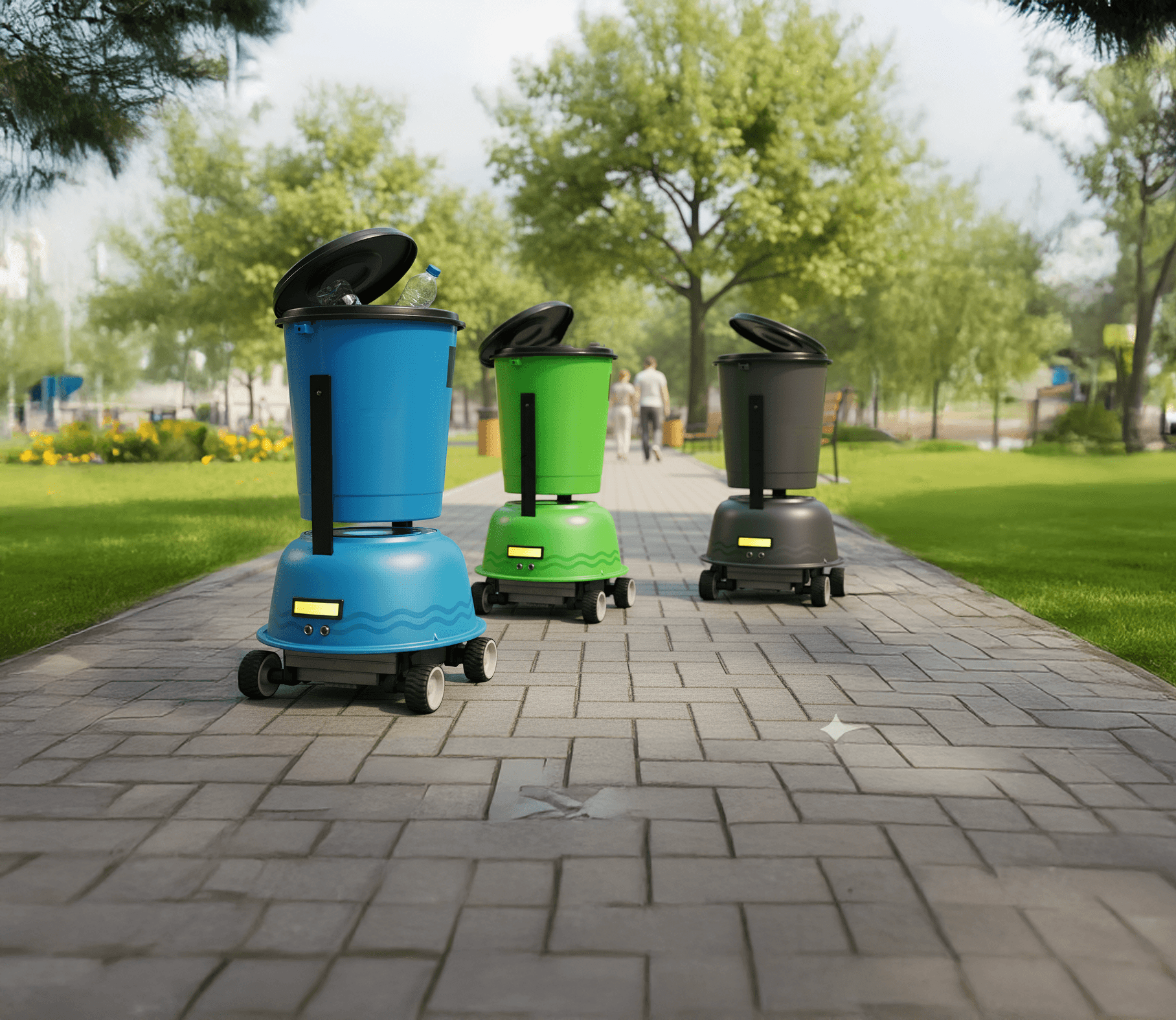
The Prototype: Built on a Solid Foundation
The initial prototype of the autonomous garbage disposal robot was developed using the robust and versatile STM32 microcontroller. This platform was chosen for its processing power and ability to handle the complex computations required for sensor data fusion, GPS navigation, and motor control. The hardware includes a combination of components such as:
STM32 Microcontroller: The central processing unit.
GPS Module: For accurate location tracking and navigation.
Ultrasonic Sensors: For real-time obstacle detection.
Servo Motors: To control the automatic opening and closing of the bin lid.
DC Motors with Encoders: For precise movement and speed control.
IR Sensors: To detect when garbage is deposited into the bin.
This combination of hardware and software forms a reliable and functional platform for testing and further development.
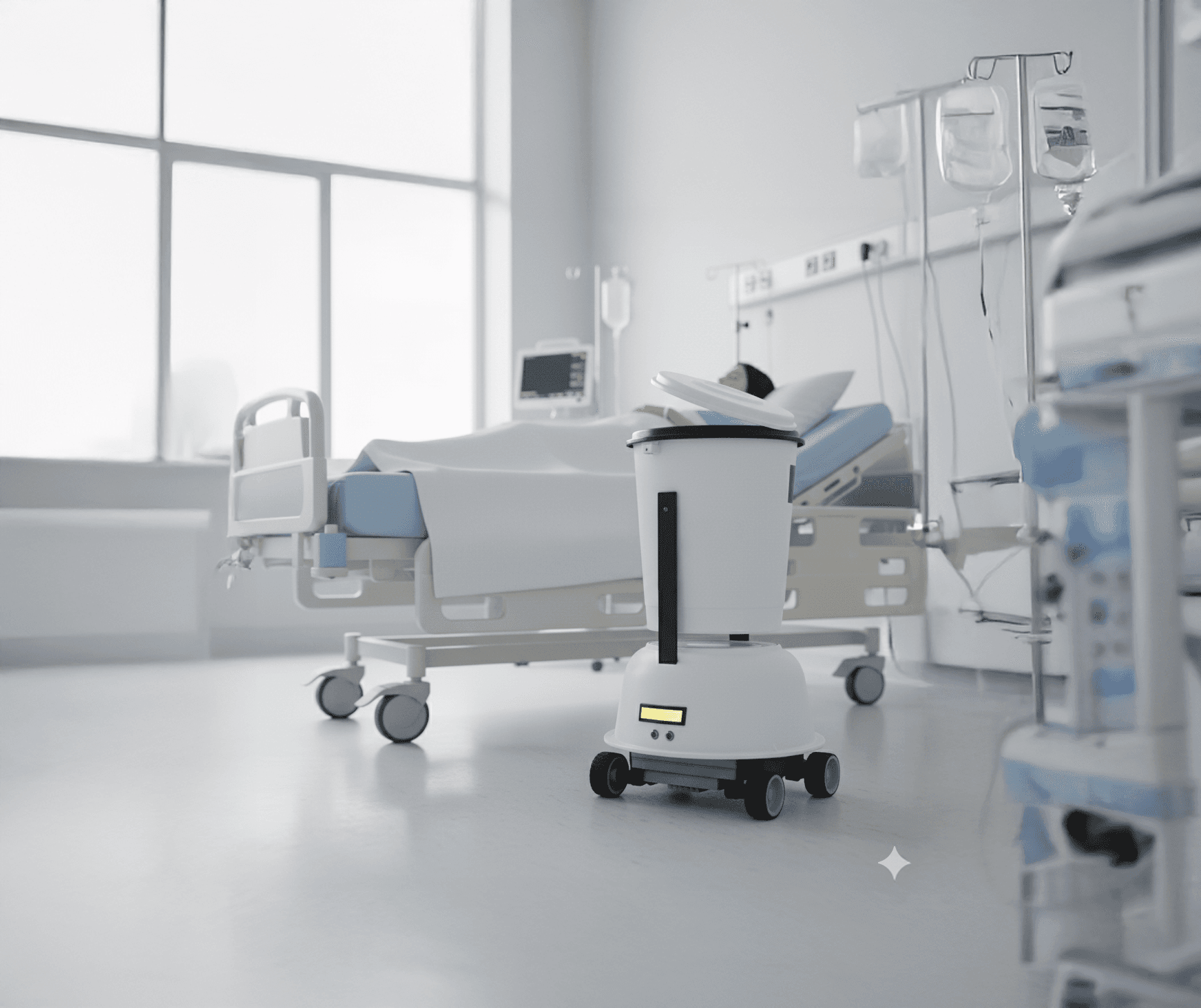
Scalability and the Future of Waste Management
The true potential of this project lies in its scalability. The decentralized nature of the system means that it can be easily expanded by adding more robots to the network. Each new bot can be assigned its own spot and waste type, seamlessly integrating into the existing fleet. This modularity makes it a highly scalable solution for various environments, from small parks to large public venues, university campuses, and even smart cities. The real-time data collection on waste levels and disposal patterns can also provide valuable insights, allowing municipalities and organizations to optimize their waste management strategies for greater efficiency and sustainability.
Coming soon.....

